Friday, August 31, 2018

A Guide to Weaning Success

A Guide to Weaning Success

It doesn’t seem like two minutes ago that your sweet bundle of joy was born and now they are at the stage where you are considering introducing solid food into their diet. Where does the time go?

Weaning, much like any other stage may be fraught with indecision and doubt. Even those parents who have children already and have tackled the solid food stage already find themselves right back at the beginning as at the end of the day all children are different.

Weaning can be messy (very messy) and you will no doubt find yourself attempting any number of silly rhymes and aeroplane noises to encourage your little one to try something new however you might actually find the process fun. This is a fabulous time where you and your baby get to explore a whole new experience together. You’ll experience new tastes, colours, textures and stains together. It’s most definitely an adventure.

Despite weaning being a great journey of discovery for all involved it is a process that should be approached gradually and with care.​

When Should You Start Weaning?

There is no iron-clad rule that states when you should start introducing food to your baby / toddler. The NHS guidelines do however state that weaning should ideally take place after or around six months, giving children’s stomachs and their digestive systems adequate time to fully develop before introducing solids. That said some children are simply not ready at six months. If in doubt about when the right time to start weaning is for your child talk to your health visitor.

There are a number of signs and signals which might indicate that your baby is ready to start weaning. These include, yet are not limited to, chewing their fists, a break or change in night-time sleep patterns, wanting additional milk and more. If your child is over six months in age and you still aren’t sure let them have a little taste and see how you get on.

What Do I Need to Buy?

You really don’t need to spend a lot of money on fashionable equipment when you are getting ready for weaning. There are of course some fabulous looking and rather costly designer weaning tools out there however what you really need for weaning is:

  • A collection of soft plastic spoons. Check your baby freebie bags from supermarkets, chemists, the midwife and more for these as you might find you already have quite the collection.
  • Plenty of bibs. When starting out you might choose soft bibs although most quickly graduate to wipe cleans varieties (always a good idea when you consider the mess!)
  • A blender or similar device that will whizz up foods into a smooth consistency. Again there are a number of wonderful tools specifically for weaning however a normal blender, even a hand held one will do the trick.
  • A highchair or seat. It is important that your child be able to sit up properly when eating so whether you have a special seat that will tilt, a highchair or one of those chairs that attach to your own dining room/kitchen chairs you’ll be fine.
  • Baby wipes and kitchen roll. Those first few tastes and spits make very little mess however as your child graduates to more colourful food and wanting the put their hands in the bowl having a good stocks of cleaning supplies close to hand is an advantage.
  • Plastic bowls and plates. Once little ones want to start grabbing the spoon and the bowl there is the very real risk that bowls and plates will end up on the floor. Plastic dishes bounce much better than ceramic ones and cheap and cheerful children’s dinnerware that sticks down to the highchair is even better at reducing the mess.

Where to Start

Your baby/toddler is not going to jump straight into three square meals a day within the first week of weaning. It is important to remember that to start with they will be learning to take food off a spoon, to roll it around their mouth and to swallow it. Some might take to this straight away, some might need extra encouragement. After this it’s a case of teaching them to cope with completely new sensations and textures.

Most parents tend to start weaning / tasting off with baby rice or baby porridge, both of which are fairly bland and may be made using the baby’s milk.​

A Guide to Weaning Success

The Next Stage

After testing and trying, getting used to the spoon and learning not to spit everything back out the next step in weaning is dedicated to trying new flavours, combinations and to gradually increase the portion sizes until eventually your baby is enjoying varied and regular meals throughout the day. Usually first foods include mashed / pureed vegetables such as carrot, potato, cauliflower and so on. As time moves on your little one will enjoy a range of sweet and savoury foods until eventually they will eat what you eat, only a smaller portion which has been suitably softened / mashed up.

Remember that when preparing food for babies, toddlers and children to add no salt and be aware of the salt content of ingredients such as gravy. Provided meals are nutritious and properly prepared there’s no reason why, once weaning is well established that they can’t eat the same food as you. Even better, eating with you at a table will promote good eating habits, even from an early stage.

What About Shop Bought Baby Foods?

Pre-made jars, pouches and boxes of baby food tend to have something of a bad reputation in some circles, with some believing that all parents “should” make food from scratch. Here at ParentsNeed we support all parenting choices, including whether or not you choose to enjoy the benefits of shop-bought baby foods.

Indeed, being nutritious and perfectly blended, as well as ideal for when out and about or short of time, jars and pouches (etc) are great when starting out especially if you are worried getting the consistency of baby food right. There is no reason to believe that these baby foods aren’t absolutely fine to use.

Organic Foods

There has been a number of very public debates regarding whether or not organic food is best. Some believe it is, some don’t and of course there is the cost factor to take into account. There is no guidance to date that specifies that babies and young children should be eating organic food so unless you feel very strongly about the issue there is no reason to change your shopping habits to include organic foods.

Eating Safely

Other than poking themselves in the eye with a soft spoon the one of the most common worries parents face when it comes to weaning, be it spoon-fed, baby-led weaning or a combination of both, is choking. Taking steps to avoid choking such as ensuring baby is properly sat up and supported, not left alone with food, that all food is properly pureed, mashed and all bones removed are all essential. If you are concerned about your little one choking have a look at this advice from the Red Cross.

Being prepared for choking in advance is one of the reasons many parents take part in a baby and children’s first aid course before or just after their children are born. It pays to be prepared for anything with parenthood.​ Every parent would do well to learn some basic life support procedures, which could make a big difference to the outcome in an emergency situation. Resources like ACLS  provide guidance that could prove critical in a life-threatening scenario.

Monitoring What Your Child Eats

Your child’s likes and dislikes will change regularly and while they may despise mashed parsnip now it may be their all-time favourite in three or six months. Keep a basic record of the foods that you’ve tried and how well they were received. If something is refused, try it again in a few weeks or months. Monitoring what your little one has eaten and when could also be helpful in identifying any intolerances your child might have or develop. If you have any concerns about intolerance or allergies, please see your health visitor or GP.

More About Food Allergies and Intolerances

Being intolerant to a food may be very unpleasant and could cause wind, constipation, diarrhea and sickness. Food allergies are more serious in that they may cause a significant and dangerous reaction.

If someone in your family has an allergy or your child suffers from asthma or eczema it is worth being extra careful when choosing which foods you give your child and when. Many choose to avoid foods commonly known to cause an allergic reaction, specifically nuts and shellfish when their child is very young. If you are aware of allergies and intolerances in your family you will probably already be proceeding with caution, perhaps leaving certain foods until your child is a little older and monitoring their intake carefully. This is another reason why keeping a record of what children eat / try during weaning may be helpful, particularly in the diagnosis of any food-related issues.

It is worth mentioning that a child can be allergic or intolerant to a wide range of foods whether there is a family history or not so do be vigilant. If in doubt see your GP, practice nurse or health visitor.​

A Guide to Weaning Success

What About Drinks?

It is important that little ones still receive their breast milk or formula until at least six months (NHS guidelines suggest that milk provides all of the nutrition babies need until six months old). It is also important to remember that when introducing foods as part of weaning that milk is still needed. Many continue with milk until their child is at least a year old, then switch to cow’s milk or a suitable substitute if wished.

It is advised that you gradually reduce bottles as you gradually increase the portions that your child enjoys as time goes one. A full drink of milk in the morning and before bed usually continues for some time.

Where additional hydration is required between feeds / meals water should be offered and water in a “sippy cup” should be introduced to have alongside meals.

The Schedule

Having a plan of action for what you are going to offer your little one and when is a good idea as if nothing else it will help you meal plan and shop. Don’t be worried however if things don’t go to plan straight away as with all developmental stages some grasp certain skills quicker than others and this is absolutely natural. If your neighbour’s child is eating asparagus and sweet potato and yours spits carrot and baby rice right back at you don’t be concerned. They’ll let you know when they are ready to move on.

Be prepared to be flexible and remember that weaning is a journey and a learning experience for you and baby so it pays to take it one day at a time, enjoying exploring foods and flavours together. Again, do seek out support from your health visitor if you have any questions specific to your child and their weaning journey.

How did you find weaning? Have you any top tips and tricks? If so, please comment below and share all with other parents approaching this exciting and wonderfully messy time.

The post A Guide to Weaning Success appeared first on ParentsNeed.

Your Second Trimester of Pregnancy

The second trimester of pregnancy is normally from the fourth month to the sixth month. It is commonly referred to as the honeymoon period of the pregnancy cycle because the troubles associated with the first trimester are behind you, and it is relatively smooth with no serious issues to deal with.

Feelings in the stomach

In the second trimester, many women are fortunate enough to be rid of morning sickness. There may be some discomfort related to the growth of your baby as the tummy enlarges, but this can be handles by taking lots of rest. You may be able to feel your child’s heart beat and in some cases even feel the baby kick or move around in the belly. Sometimes you will feel some funny blips in the stomach as your baby hiccups, these movements by the baby are a normal sign of a healthy growth.

Beautiful hair

Many women get an increase in hair growth during pregnancy, and it comes out thick and healthy. However, the hair growth may also be triggered in certain places that you are unfamiliar with experiencing hair growth in, such as you face and back. This is a result of hormonal changes and should not alarm you.

Beautiful skin or not

Many women project a healthy glow during pregnancy with beautiful skin. In other cases, the skin has problems such as pigmentation, acne and sensitivity to the sun. Ensure you apply a good sunscreen of SPF 30 and above and avoid using face creams to deal with any acne or pigmentation issues as the situation will work itself out when you deliver the baby or as you approach your delivery date.

Change of shape

Your waistline will expand to the point that you need to invest in loose clothing. You will have gained some weight- at most 22 pounds due to the fact that you are carrying another growing being in your womb. The expansion of your body will result in certain pregnancy issues such as stretch marks on the belly, flanks and breasts. This occurs when the size of your body increases causing the skin to stretch resulting in stretch marks.

Properly moisturizing your body with baby oil or cocoa butter lotion helps to decrease the appearance of stretch marks on your body. You should also keep your body well hydrated by taking lots of water and also eating a well balanced diet. Eat antioxidant rich foods such as berries, fruits and vegetables. Take vitamin E rich foods such as nuts, and vitamin A- rich foods such as sweet potatoes and carrots. Take omega 3 rich foods such as oily fish and eggs to help keep your skin properly lubricated from the inside-out.

Shortness of breath

You may end up getting short of breath when you exert yourself-even in a mild way. This is due to the growth of the baby resulting in an extended abdomen, and crowding your lungs and rib cage. This means there will be a change in the air flow that you are used to, but you will be able to adjust by taking it easy and avoiding any unnecessary physical exertions.

Varicose veins

This will happen as the body generates additional fluid and circulation so as to supply the baby with all the body fluids it needs. Keep your feet up, take frequent walks, wear supportive hosiery and get relaxing foot massages to deal with varicose veins and sore ankles.

Tender gums and nose bleeds

Many women suffer from swollen, tender and bleeding gums. This is due to the change in hormones that cause a rush of blood to the gums that may cause them to be unusually sensitive. This causes the gums to bleed easily. Hormonal changes can also cause the swelling of the mucus membrane in the nose. This will cause a stuffy nose, and in severe cases end up in nose bleeds.

You can combat these changes by using soft brushes, using saline drops on your stuffed nose or using a humidifier in your home to keep the air moist.

Backaches

The growing baby may create some extra pressure on your back that will end up making you sore, especially on the lower point of your back. You will be uncomfortable seating in certain chairs, or sleeping in certain positions.

You can use a pillow to support your back when you sleep or sit down. Sit in chairs capable of providing you with enough back support. Get a good back massage to relieve the pain.

Vaginal discharge

Expect some body discharge that is thin and milky white in color. Any other color or consistency may indicate a urinary tract infection or other complications, and you should consult your doctor for advice.

These are some of the changes you can expect in your second trimester. If you feel uncomfortable about a certain issue occurring in your body, consult your doctor for advice.

The post Your Second Trimester of Pregnancy appeared first on ParentsNeed.

Thursday, August 30, 2018

Top 5 Best Pacifiers for Babies | 2018 Reviews

Top 5 Best Pacifiers for Babies | 2018 Reviews

There are times when you suddenly get a chill or a jolt when your baby cries out of the blue. You wonder if they were suddenly hurt or that something horrific has probably just happened. And you suddenly get this immediate gush of relief only to find out that your baby is just looking for your attention. We know how that feeling always comes and goes and the only thing that relieved our burdened hearts was a simple distraction, mommy boobies!

Although this may be the best solution for your little adorable tots, it’s not always time wise for mommy to always let your baby latch on and never leave your side. It can also be a hassle when you need to get other things done especially things that need be done without your baby around. That’s why pacifiers for babies were made. They literally ‘pacify’ all the fuss.

Babies love to suck, it gives them this sense of relief and it also helps them doze off on their own. Pacifiers for babies help them get the relaxation that they need and also that familiar feeling they always get when they latch on to you, mommies.

There are plenty of pacifier brands out there and all of them say they are the best. We did all that troublesome hunting for you and came up with the best pacifiers for babies. We have on our list good recommendations and how well they fared in keeping babies reducing the fuss and fully getting satisfied. Here are what our babies loved and yours would too!

Quick Comparison Table

Philips Avent Orthodontic Translucent Silicone Pacifier

The First Years GumDrop Newborn Pacifier

MAM Glow in the Dark Night Orthodontic Pacifier

Tommee Tippee Closer To Nature Everyday Pacifier

Honeypie Fruit Feeding Pacifier

Philips Avent Orthodontic Translucent Silicone Pacifier
The First Years GumDrop Newborn Pacifier
MAM Glow in the Dark Night Orthodontic Pacifier
Tommee Tippee Closer To Nature Everyday Pacifier
Honeypie Fruit Feeding Pacifier

$$$

$$$

$$$

$$$

$$$

0.8 ounces

0.8 ounces at most

2.6 ounces

1.6 ounces

1.4 ounces

Standard round shape

symmetrical, lighter, smaller

skin soft symmetrical

symmetrical

textured symmetrical

Philips Avent Orthodontic Translucent Silicone Pacifier

Philips Avent Orthodontic Translucent Silicone Pacifier

Well what do you know?! Philips isn’t just a brand for electronics; It makes one great brand for babies too. We have absolutely loved this Philips Avent Orthodontic Translucent Silicone Pacifier, and here we will always start off with the shape of the nipple: whether your baby has it on the right side up, upside down, or side up, the nipple doesn’t change or affect any part of your baby’s mouth.

If you are worried about your baby growing up with a crooked set of teeth, then you don’t need to fuss about that because this orthodontic design becomes a very helpful aspect of this pacifier for infants. Philips Avent pacifier comes with different designs depending on the age. When just a newly born baby arrives, we recommend that you use the Philips Avent Soothie Pacifier 0-3 months. They have packets for each and every type of Philips Avent soothie pacifier you get exactly the instant reprieve of your fussy baby’s worries.

What’s so great about Philips Avent Soothie Pacifier made different designs that fit each age group, Philips Avent soothie pacifier 0-3 months is designed medically to fit in your newborn’s mouth to help then calm down and feel relieved. The Philip Avent Soothie Pacifier 3m+ is light, smaller and can fit any Avent Soothie clip or any other pacifier handle out there. The Philips Avent soothie pacifier 6-18 months is a perfect toy, teether and just any other form of entertainment for your growing snifter, they are more attractive but also have those 6 punched hole on the receptacle to allow a better airflow for sensitive skin. We know how drool can get caught between the pacifier receptacle and the cheeks and can even cause rashes in occasion.

What we love even more about Philips Avent Soothie Pacifier is that they are all BPA free. They are made with the orthodontic symmetrical collapsible latex-free silicone nipple design to help in keeping our babies’ gums prep for a good and healthy oral development. In simpler words, it helps our tots grow good and healthy teeth. Because it’s tasteless, odorless and latex-free, it makes a fairly easy transition from breast, bottle and pacifier. That’s why it’s the best pacifier for infants and babies.

Details of the Philips Avent Translucent Silicone Pacifier

Colors

Clear, Pink, Blue, Green, Orange, Purple, Yellow

Shape

Standard round shape

Weight

0.8 ounces

Recommended Age

0-2 months, 0-3 months, 0-6 months, 6-18 months

Special Features

Orthodontic, symmetrical collapsible silicone nipple, with six holes, glow in the dark (nighttime)

The First Years GumDrop Newborn Pacifier

The First Years GumDrop Newborn Pacifier

Its name really suggests which age group fits it best. The First Years Gumdrop Newborn Pacifier is designed to fit in your little cuddle blanket’s mouth. It’s smaller, softer and lighter than the typical pacifier for babies. They are designed to fit your baby’s face and steer clear of your baby’s newborn button nose.

We love this pacifier because it was made with care and more detail and attention for your baby’s need. Since newborns care so little about design and what to and not to wear, this simplistic life our newborns have fits The First Years GumDrop Newborn Pacifier. It doesn’t have the pacifier receptacle. It also doesn’t have that security ring that can get annoying for our babies. And besides, what would our newborns do with a security ring?

If needed be, its simple design is also compatible with most pacifier holders or receptacles and clips even like that of the Avent Soothie clip. This awesome one piece pacifier is actually a soothie. Soothie vs pacifier? Which is which? Well, Soothies are the ones you go out the hospital with. Mom’s are given this hospital grade soothies that are mainly designed to help babies relax and something to chew or nibble on while the mouth is developing. Pacifiers on the other hand are created to be more firm because they are made for older babies like 6 months and above. It helps them with their teeth development and also as what other Pediatricians say helps our babies from the Sudden Infant Death Syndrome. Although, we aren’t really sure how it is directly related but research shows that constant sucking and chewing of babies do prevent the Sudden Infant Death Syndrome.

This soothie is a perfect fit on your baby’s face. It isn’t too wide enough to disturb your little one’s breathing and also doesn’t allow drool build-up between the mouth and the pacifier. We also have come to witness just how simple yet so loved by babies are. They make the best pacifiers for newborns. Although design-wise, it’s not much, it is absolutely everything for a first introductory pacifier for babies.

Details of The First Years GumDrop Newborn Pacifier

Colors

bright translucent colors, like: blue, green, pink, purple, clear, orange

Shape

symmetrical, lighter, smaller, soothie

Weight

0.8 ounces at most

Recommended Age

0-3 months

Special Features

hospital grade pacifier, BPA-free, Latex-free silicone

MAM Glow in the Dark Night Orthodontic Pacifier

MAM Glow in the Dark Night Orthodontic Pacifier

It’s exactly your kind of baby pacifier that will immediately soothe your baby while keeping your baby totally fuss-free. It is one of the best pacifiers for babies starting from the age 6 months and up. You won’t have to worry about how to get a breastfed baby to take a pacifier because this nipple pacifier is wonderfully just as soft as mommy’s nipple.

Most pacifies come with the bottle-shaped pacifier that is a bit more firm and chewy. On the other hand, this is absolutely the best pacifier for breastfed babies because its ultra-soft nipple is actually a breast like pacifier. Its nipple-like pacifier softness is ideal to keep that developing mouth strong and healthy while making your child feel comfortable and less fussy about having some strange and foreign object enter their mouth. It is also one of the best pacifiers for teeth development especially from the ages six months and up where our kids’ gums are already prepping to let those chompers pop out.

We love this pacifier for babies because other than its skin soft nipple texture, it is also tasteless, odorless and BPA-free. Your baby will easily adjust from nipple to pacifier because this. It also has an anti-slip silicon feature and a curved shield with multiple holes to have a more comfortable feel for your baby. We also love the fact that it glows in the dark because in case our babies get fussy at night, it’s really easy to find it. However, the night glow doesn’t last very long which is somewhat unfortunate.

Another love-it about this breast pacifier nipple is the fun and age-appropriate motifs. It can range from ball sports (we know how babies just love balls whether they are boys or girls) like football and baseball to motifs like cartoons characters and trends and many more. They are so collectible its fun just buying them for shelving alone! Besides, they do such a great help and provide such a wonderful purpose for your baby’s dental health and over-all attitude.

Details of the MAM Glow in the Dark Night Orthodontic Pacifier

Colors

Fun multi-colored designs

Shape

skin soft symmetrical nipple

Weight

2.6 ounces

Recommended Age

6+ months

Special Features

Anti-slip textured nipple, symmetrical nipple, curved shield for baby, glows in the dark

Tommee Tippee Closer To Nature Everyday Pacifier

Tommee Tippee Closer To Nature Everyday Pacifier

The best are always out there as long as you find the right one for you and your baby. A happy baby is a satisfied baby and a satisfied baby is a relaxed and totally a less fussy little tot. There are plenty of ways to give your child a treat to lessen all the cries but the best thing to give your child is a nice comfy chair (or bed) and the best pacifiers for babies. Pacifiers are baby soothers that get the job done in an instant.

These are mommy's favorites because they are just the right size, shape and softness in between bottle nipples and the real deal that it doesn’t present any nipple confusion. It is also symmetrical in shape that allows the perfect nipple for teeth to grow and develop healthily. This pacifier for babies fit the age range of six and above months old. They are also made of translucent designs that don’t overwhelm your bay’s adorable face either.

This Tommee Tippee Pacifier review doesn’t just focus on the good side of it. Although it is a great pacifier over-all, there is just one problem: cleaning. It is dishwasher safe and you definitely sterilize it but the problem is that the pacifier comes with holes at the sides of the nipples that allow water to get in. cleaning it can be a hassle because you would have the need to keep squeezing it out to completely drain the water out. And sometimes, it can get soggy from you baby’s drool so it has to be cleaned frequently.

However, it doesn’t change the fact that it is one of the best pacifiers for breastfed babies because they are definitely soft and perfect for suckling babies. These pacifiers for breastfeeding babies are also great on babies who really love to suckle all day long but not necessarily drinking milk from a bottle and from mommy’s breasts. You just need to give it to your baby and let them suckle all they want.

Details of the Tommee Tippee Closer To Nature Pacifier

Colors

translucent pink, blue, clear, grey, green, orange

Shape

symmetrical

Weight

1.6 ounces

Recommended Age

6+ months

Special Features

translucent design feature

Honeypie Fruit Feeding Pacifier

Honeypie Fruit Feeding Pacifier

Do you want to turn those sobs and screams to smiles and sleep? All you need is to introduce the best pacifier for breastfeeding babies. How about introducing new food with less aggravation and frustration? Well, we will say the same thing: choose the best pacifier for breastfed babies. Still don’t understand? Here’s a concept pacifier that you will certainly love!

Honeypie Fresh Food Feeder is definitely a nipple pacifier that doubles as a fruit feeding pacifier. Your baby needs to learn how to eat solids and get used to new flavors and that’s how this pacifier is helpful in more ways than one. This is one product that mommies really love a lot. It is easy to dissemble for mommies but difficult for babies to tear apart. It is also relatively easy to clean: just wash with soap and water or dump it in the dishwasher. You can also sterilize it to make sure it’s baby clean.

This is a fruit feeding pacifier that opens up where you can put some juicy fruits inside the nipple for your baby to suckle on. It allows your baby to get familiar with different tastes and also to start the feeding process that often comes at the 6th month of your baby’s age.

What’s great about this pacifier for babies is that it doesn’t cause any nipple confusion. Without the fruit or any food inside the nipple is still makes an awesome nipple pacifier for your baby. This is one of the pacifier brands that think more than just your baby’s dental health but his/her overall nutrition too. Babies can be apprehensive in tasting new foods but incorporating it in something really familiar like a pacifier is one genius way to let your child start the healthy eating process.

It also acts as a dependable teether. It is soft enough to become a pacifier for babies but also firm enough to satisfy those itching gums. You will also definitely love the fact that it is BPA free and is made of latex-free silicone.

Details of the Honeypie Fruit Feeding Pacifier

Colors

blue, pink and multicolored rattler

Shape

textured symmetrical nipple

Weight

1.4 ounces

Recommended Age

6+ months

Special Features

fruit feeding pacifier, anti-slip nipple

Whether your baby is breastfeeding, bottle-feeding or both, there still comes a time where your baby just wants to suckle. Suckling on a bottle of milk will give them a bloated stomach or may even cause them stomachaches. In order to relieve the suckling sensation, the best baby pacifiers were created to soothe and relax, as well as satisfy the need to suck on something. Pacifiers for breastfeeding infants and babies are great baby essentials to have and keeping one always ready to give is one way to keep your baby happy.

The post Top 5 Best Pacifiers for Babies | 2018 Reviews appeared first on ParentsNeed.

Top 5 Convertible Baby Car Seats | 2018 Reviews

Top 5 Best Convertible Baby Car Seats | 2018 Reviews

Life used to be so easy – and so unsafe. When our parents and grandparents had their children, they simply put them in flimsy aluminum “car seats” next to the driver’s seat, and when the kids outgrew those “safety” seats, they were old enough to ride in the back with everyone else.

Today, parents have to deal with laws (which are different in every state) mandating different types of child car seats for different ages, and buy a succession of infant, rear-facing, front-facing and booster seats as their children grow older. There are very good reasons for those laws, and few would argue their wisdom. That doesn’t lessen the financial burden on parents, though.

One smart way to at least avoid some of the expense of continual car seat purchases is with the use of convertible baby car seats. These versatile products install initially as the required rear-facing seat for children under the age of 2 (at least, that’s the age requirement in most states). They can then be turned around to become a front-facing car seat for toddlers, suitable for use until the children grow too big for the convertible seat and need a booster seat.

Today’s convertible seats can be confusing or difficult to install, particularly in small cars, because they can be installed either by attaching a vehicle’s seat belt to them or via the government-mandated LATCH (Lower Anchors and Tethers) system straps and hooks. But these seats make up for it in versatility since once they’re in your car, they can stay there for years. They’re also designed and built for child safety our parents and grandparents never dreamed of being possible.

With prices ranging from $50 to $500 and their children’s well-being at stake, parents often lay out enormous money, assuming that the most expensive models must also be the safest and best-designed. That’s not always the case; there are some terrific seats that aren’t budget-busters.

We know that you are excited with our top 5 list, but you may want to check first our Best Convertible Baby Car Seat Buying Guide here.

Done? Now, here’s our list of the top 5 convertible baby car seats on the market.

Quick Comparison Table

Evenflo SureRide DLX Convertible Car Seat

Britax USA Advocate ClickTight Car Seat

Chicco NextFit CS Convertible Car Seat

Graco My Ride 65 LX Convertible Car Seat

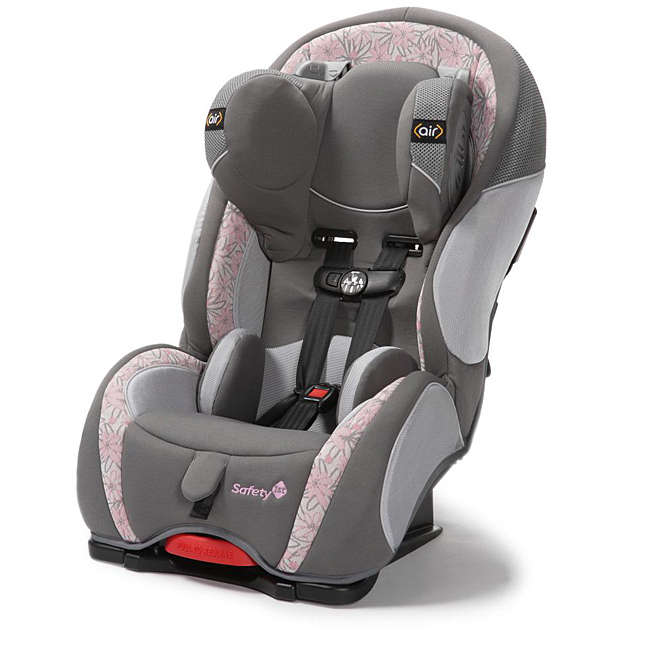
Safety 1st Complete Air 65 LX Convertible Car Seat

Evenflo SureRide DLX Convertible Car Seat
Chicco NextFit CS Convertible Car Seat
Graco My Ride 65 LX Convertible Car Seat
Slight Touch Wrist Digital Blood Pressure Monitor

$$$

$$$

$$$

$$$

$$$

10.5 pounds

29.4 pounds

31.5 pounds

15.7 pounds

21 pounds

6 Harness Positions

7 Harness Positions

9 Harness Positions

5 Harness Positions

4 Harness Positions

Evenflo SureRide DLX Convertible Car Seat

Evenflo SureRide DLX Convertible Car Seat

We’ve ranked this seat at #1 on our list because safety tests done by Consumer Reports show it to be the safest convertible car seat available – but it also proves that you don’t have to spend an enormous amount of money for safety, because the Evenflo SureRide only costs about $75-$100 depending on where you buy it. (It’s also a Mom’s Pick award winner at BabyCenter.com.)

This lightweight seat, completely manufactured in America, is not only safe but is built to accommodate children as they grow older. The height and weight limitations are 5-40 pounds and 19-40 inches for rear-facing, and 22-65 pounds and 28-54 inches for front-facing. This means the DLX can be used for as long as six years before it’s necessary to transition a child to a booster seat.

As with all modern car seats, the Evenflo can be connected either with the LATCH system or a rear seat belt. Installing the Evenflo SureRide isn’t quite as easy as it is with a few of the models lower down on our list; it’s one of many car seats that require you to fiddle with a lower plastic recline foot to get the correct incline angle, and also one of many that can require some struggles to get the LATCH connectors hooked up. But once it’s in your car you’ll appreciate its versatility. There are six different height positions for the 5-point harness and two for the crotch buckle, and the harness adjustments can be made easily from the front of the car seat. There’s plenty of room for a child inside, but this is a narrower model than some of its competitors, so it fits easily inside compact cars with smaller back seats. There are removable cup holders and body pillows, too.

You may be wondering, understandably, if this is the safest seat and it’s made in America yet is much less expensive than many others – what corners are being cut? It’s a legitimate question. The DLX doesn’t have the same amount of padding as higher-priced seats, and the fabric used is definitely cheaper material. Also, the straps are also more prone to getting twisted up (requiring time to untwist them before you can start the car and head off). Neither of those, to our minds, are deal-breakers, though; if the padding isn’t necessary for this seat to get the highest safety rating, and we have to spend an extra minute or two untwisting straps, we’ll gladly make that tradeoff to save hundreds of dollars and get the safest seat for our child.

Details of the Evenflo SureRide DLX Convertible Car Seat

Weight Limit

40 pounds rear-facing, 65 pounds front-facing

Height Limit

40 inches rear facing, 54 inches front-facing

Harness

5-point

Harness Positions

6

FAA approved

Yes

Weight

10.5 pounds

Height/Width

30 inches/18.5 inches

Warranty

90 days

Britax USA Advocate ClickTight Convertible Car Seat

Britax USA Advocate ClickTight Convertible Car Seat

You’d rather spend high-end money for a high-end car convertible car seat that also has a high safety rating? This Britax model is for you. It’s a premium car seat that also ranked extremely highly on the Consumer Reports safety tests, and comes with several proprietary systems developed by the company: the Click and Snug Harness Indicator, HUGS chest pads with safe cell technology, and True Side Impact Protection.

Without going into a ton of specifics on each one, Click and Snug gives you an audio signal when the child harness is properly adjusted, the HUGS chest pads have cells designed to compress upon impact and reduce the force that would be felt by the child, and the True Side Impact system lines the head restraint with special, energy-absorbing foam to make sure the child’s spine remains straight in the event of an accident. There are also three layers of side protection. Are they all absolutely necessary? Possibly not, but they definitely provide a level of reassurance for parents.

The ClickTight is named after the Britax simplified system to attach their convertible car seats with a seat belt. Instead of having to manually thread the belt through a number of hooks or holes, you just push a button to open the ClickTight, run the belt through the designated path, close the ClickTight and the system grabs it and tightens it all by itself. Trust us, it’s a time- and frustration-saver. There are also lower LATCH connectors, of course. The tether on this seat can (and should) also be used in both front- and rear-facing modes, which is not always the case with some convertibles. One other nice feature: the harness straps are twist-resistant.

There are seven recline positions available, with a very nice color-coded indicator making it easy to see when you’ve chosen the right selection for the size of your child, another plus. The weight limitations of the Britax are identical to the Evenflo, while the height limitations are slightly more restrictive but still in keeping with the heights of most toddlers and older children. The seat is heavier and wider than the SureRide DLX, which may either be a pro or a con for you.

We can hear you holding your breath, waiting for the price. It’s a little over $300 – quite pricey if you’re on a budget, but quite possibly a price you’re willing to pay for a safe convertible seat your child will be using for years.

Details of the Britax USA Advocate ClickTight Convertible Car Seat

Weight Limit

40 pounds rear-facing, 65 pounds front-facing

Height Limit

Variable rear facing (one inch from the top of the head restraing), 49 inches front-facing

Harness

5-point

Harness Positions

7

FAA approved

Yes

Weight

29.4 pounds

Height/Width

23.5 inches/20.5 inches

Warranty

1 year, limited

Chicco NextFit CS Convertible Car Seat

Chicco NextFit CS Convertible Car Seat

Chicco has a reputation for making technologically advanced high-end car seats, and the NextFit CS is their latest and greatest model. One of the aspects of the NextFit that we liked is that there’s more headroom when a child is sitting in the rear-facing installation of the seat, up to 49 inches; it’s likely your child will already be exceeding the weight limitation for a rear-facing seat before he or she reaches 49 inches, but there are some families for whom this will be an important feature. Other size and weight limitations are similar to our first two reviewed models.

We think this is the easiest model to install and remove of all the top 5 convertible baby car seats on our list, thanks to its patented SuperCinch system. Push-button anchor connectors connect to the car’s LATCH connectors, and then you just pull the straps on each side of the seat and you’re done. Clamp-type seat belt lockoffs make it just as simple to attach using a car’s seat belt.

The harness is easy to secure and doesn’t get tangled up easily, thanks to a ComfortFlex harness management system, there are nine recline positions and two positions for both the chest clip and crotch buckle, and there’s extra side padding as well as a cup holder. This is another convertible seat which ranked high on Consumer Report’s safety tests, and it’s easy to see why. We probably don’t have to tell you it’s also expensive, in the same price range as the Britax, but it’s worth it.

Details of the Chicco NextFit CS Convertible Car Seat

Weight Limit

40 pounds rear-facing, 65 pounds front-facing

Height Limit

40 inches rear facing, 54 inches front-facing

Harness

5-point

Harness Positions

9

FAA approved

Yes

Weight

31.5 pounds

Height/Width

27 inches/21 inches

Warranty

1 year

Graco My Ride 65 LX Convertible Car Seat

Graco My Ride 65 LX Convertible Car Seat

Graco is a respected name in baby furniture and products; if you’ve had a baby in the last 15-20 years, you’ve undoubtedly had at least one Graco in your child’s nursery. Their convertible car seats are solid products, and while this car seat is a bit more expensive than the Evenflo that topped our list, it’s still only going to run you a little over $100.

For that money, you get a safe and versatile convertible seat. We’d rank it as moderately easy to install, with different anchor straps for rear- and front-facing installation and hook hardware instead of push button releases for LATCH attachments. There’s some tugging and squeezing necessary, but it’s not arduous. It also does take a bit of muscle to adjust the five-point harness, though, which has five positions from which to select.

The My Ride has been extensively safety-tested and surpasses all standards. Although there are no proprietary systems with fancy names, there is energy-absorbing EPS side foam to absorb the impact of a crash – not as plush or extensive as higher-priced models, but definitely more than sufficient. There’s only one crotch position, but there are two cupholders if that matters to you. The one big negative when the Graco is front-facing is that the seat is deep and leans back, something that may not suit antsy toddlers or older children who want to sit up straight.

This is a good price for a good reversible car seat, and while we prefer the Evenflo at this cost level, the Graco is worth a long look.

Details of the Graco My Ride 65 LX Convertible Car Seat

Weight Limit

40 pounds rear-facing, 65 pounds front-facing

Height Limit

49 inches, rear- and front-facing

Harness

5-point

Harness Positions

5

FAA approved

Yes

Weight

15.7 pounds

Height/Width

26 inches/20.5 inches

Warranty

1 year, limited

Safety 1st Complete Air 65 LX Convertible Car Seat

Safety 1st Complete Air 65 LX Convertible Car Seat

We’re always skeptical when a company chooses a name like “Safety 1st,” which makes it seem that there’s some reassurance needed for consumers. In this case, though, you can tell by looking at the construction of this convertible car seat that it’s built with safety in mind, from its large size and generous foam padding to its huge head wings with “Air Protect” technology.

What really attracted us, though, is the color-coded installation system which makes putting the Air 65 into your car a relative breeze (you still have to deal with LATCH attachments and seat belt threading, never an easy task). But if you’re a bit mechanically challenged, as we are, and have spent half-an-hour wrestling to install a car seat, as we have, the Safety 1st system that essentially walks you through the process will be a welcome relief.

There is an anti-tangle harness, three crotch positions, and a four recline positions which can be adjusted with just the pull of a lever. The one major drawback for some people will be the Air 65’s large footprint, making it a much better choice for big cars than for smaller ones. It falls into the medium-price range on our list, at around $175.

Details of the Safety 1st Complete Air 65 LX Convertible Car Seat

Weight Limit

40 pounds rear-facing, 65 pounds front-facing

Height Limit

40 inches rear facing, 49 inches front-facing

Harness

5-point

Harness Positions

4

FAA approved

Yes

Weight

21 pounds

Height/Width

27 inches/22 inches

Warranty

2 years, limited

FAQ ( From Our Ardent Fans)

  • How long are the car seats good for? This varies from company to company and the quality of the material used by the manufacturer. Its worth to check the expiration date at the bottom of the seat to understand your seat's durability. As a rule of thumb, if you are wondering how long is the car seat good for, we recommend to use car seats no longer than 6 years from the date of manufacture and/or purchase. If you are planning to make use the same seat for your little one from his elder sibling, it is highly advised you check the expiration date from the manufacture/purchase and not the actual usage of the seat
  • Why do car seats expire? Mostly due to the quality of the materials used and the actual material itself. Car seats are made of lot of harnesses, latches, as well as material that is conducive enough to withhold stress and impact. Over a period time, these wear out and become less durable from a lifetime perspective.
  • When do car seats expire? Please see question 1 above. This depends on manufacturer to manufacturer as well as the quality of the material used
  • How do I find the car seat expiration date? All manufacturers have to follow regulatory & consumer watchdog guidelines and are legally obliged to display expiration date of car seats so finding the expiration date is not onerous. Most of the time this is displayed under the seat itself or in rare circumstances, if you manage not to find one, check the owner's manual
  • How long until my seat expires? The typical lifespan of a very well built car seat from a reputed manufacturer lasts for 6 years but there are some robust recent models that can last as long as 9.
  • How do i dispose off my car seat? After expiration, please recycle them to dispose off
  • How do I recycle my old car seat? With all the manufacturers swaying towards sustainability and aim to be more greener, thankfully, most of the car seat parts are recyclable.  Most US cities now have car seat recycling programs like ReSEAT, where its just as easy as dropping your old seat off. You could also drop it in your local recycle centres or mail your to a recycling program like BabyEarthRenew
  • Are there any new car seats that are fully and 100% recyclable?  A variant of Clek, Foonf claims to be manufactured with all recyclable materials and adhere to sustainability guidelines, however, we haven't checked their particular model. The manufacturer also offers a loyalty discount of twenty dollars on the new seat when the old one is sent back, so worth checking it!

The post Top 5 Convertible Baby Car Seats | 2018 Reviews appeared first on ParentsNeed.