Tuesday, October 30, 2018

Advantages of Breastfeeding for Both Mother and Baby

Women find that there are many advantages of breastfeeding their children, not only for them but also for their babies’ health. Even if nowadays there are many types of formula which come very close to providing the baby with almost the same nutrients and protection as the breast milk, they are still far from reaching the high quality and advantages of breastfeeding a baby. A woman who chooses to breastfeed her baby can count on many benefits, not only physical, but also psychological as she can rest assure to provide her newborn with all the nutrients he needs for a healthy growth.

A baby experiences advantages of breastfeeding since his very first nursing session. In fact, the first time a woman breastfeeds, right after delivery, her body produces a type of milk called colostrum. It is only a very small quantity of yellow-colored milk that is full of vitamins and nutrients that protect the baby from infections as he is so little and vulnerable. As the baby grows so does the mother’s milk production. Her milk will also change, becoming white, releasing more nutrients and allowing the baby to fully enjoy the advantages of breastfeeding.

Advantages of breastfeeding for the baby

The baby is indeed the main person who fully enjoys the advantages of breastfeeding. In fact, it has been scientifically proven that babies who are breastfed tend not to become as ill during the first year of life as babies who have are bottle-fed. The reason is because a woman’s body is able to produce all the necessary vitamins and nutrients that will protect her baby from getting sick. The list that follows shows some of the main advantages of breastfeeding that mother and baby can count on:

  • Highly reduced risk that a breastfed baby might suffer from common problems that most bottle-fed babies experience such as respiratory problems, allergies, stomach viruses, ear infection.
  • Babies who are bottle-fed, contrary to those who are breastfed, can develop problems to their intestine as formula milk does not provide them with the necessary protection against germs and viruses.
  • Breastfed babies have much less chances of developing cancer during the course of their life, than babies who were formula-fed. Moreover, they are also more protected from getting diabetes type 1 and 2, as well as heart diseases and obesity
  • Babies who are breastfed tend to have a higher IQ level than bottle-fed children.
Advantages to breastfeeding for the mother
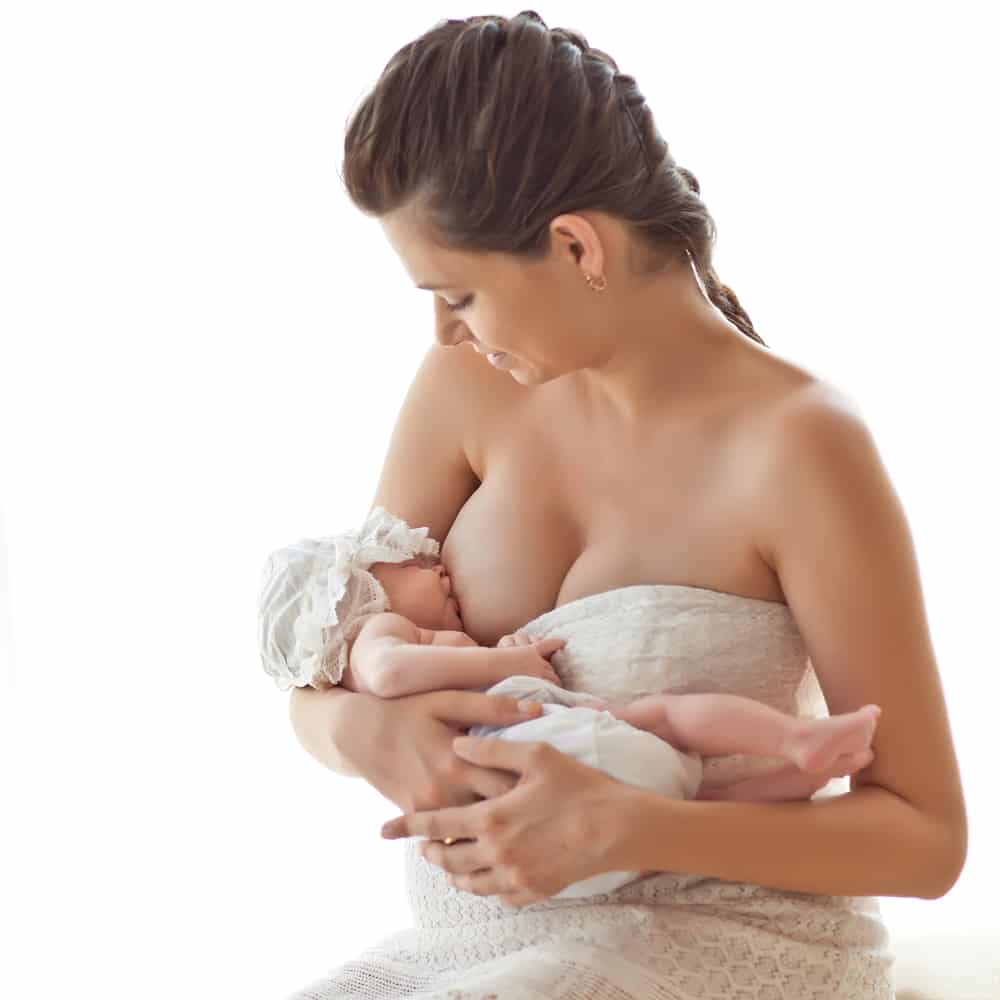
BreastFeeding Advantages

Children are not the only ones who have a long list of advantages of breastfeeding. In fact, mother can also enjoy the benefits of such a special bond.

  • Reduced risk of postpartum depression. Women who breastfeed tend to suffer less, if at all, from postpartum depression. This is due to the relaxed and stress-free atmosphere that nursing a child creates. Moreover, while breastfeeding a woman’s body releases endorphins, which are chemicals responsible for making a person feel happy.
  • Women who nurse are also considered to be at low risk for getting cancer.
  • Breastfeeding helps women to stay in shape as a woman burns around 500 more calories a day if she nurses.

Women who decide to nurse their children not only create an intense bond with their newborns but also share many advantages of breastfeeding that will enhance their life expectations and overall health.

The decision to breastfeed your child is something personal. Since it involves your body and someone who matters to you the most, it is your choice that will prevail in the end. Bear in mind that breast milk is considered the best nourishment you can provide for your baby. In addition, you can reap great rewards from breastfeeding. Let this article enlighten you about the many topics related to breastfeeding. Let’s start by debunking the different myths associated with this practice:

Myth no. 1: To maintain an adequate milk supply, a mother must only nurse her child four to six times in a day

The simple rule here is that the more often you breastfeed, the better the milk supply. This also means your baby will gain more weight and will get to enjoy your breastmilk for the months to come. You can even average of 9 times a day especially in your first few weeks of breastfeeding. The hormone prolactin is elevated after you wake up so maximize these times to breastfeed your little one.

Myth no. 2: The mother should schedule feeding times as to allow the breasts to refill milk

A nursing mother’s body is always in the zone to produce milk. The breasts serve as storage bins for this breastmilk. The milk production will slow down or speed up depending on the milk available in the breasts. The point is that you don’t need to wait for the breasts to be filled up again; you let your body do its job.

Myth no. 3: The hindmilk is more nutritious than the foremilk

Becoming Acquainted with Breastfeeding

To define these two terms, foremilk is the milk at the start of the feeding while the hindmilk comes at the end. Research shows hindmilk contains has more fat content that foremilk but the difference on the nutritional content between the two is not very significant. You don’t have to worry if your baby is getting more foremilk than hindmilk. It is as long as feeding times are regular, you will see that your baby will begin to gain a healthy amount of weight.

Myth no. 4: Nursing mothers should utilize both breasts during a single feeding schedule

This is not always the case. You can give only one boob to your child and let him or her maximize the milk contained in the ducts. If you feel that the baby is not sucking enough milk from one breast, that is the signal you offer the second boob. This can also help the baby practice proper latching onto your breast.

Myth no. 5: A mother who breastfeeds her child must also consume milk to increase the quality and quantity of her milk

A balanced diet composed of fruits, vegetable, proteins, and fibre is highly recommended for a nursing mother to be able to help the body produce breast milk. There is no exact evidence to support the claim that mammals need to drink milk in order to make milk or even increase the quality of her milk.

Myth no. 6: Scarcity of breast milk is due to the mother’s fatigue or stress

There is no exact explanation that connects poor milk supply to fatigue or even malnutrition. However, it is advisable for mothers to not stress themselves as they are still recovering from the delivery (or surgery, if the mother underwent cesarean section). The inadequate milk supply can be related to improper latch-on position of the baby to the mother’s breast.

Myth no. 7: Mothers who frequently carry and breastfeed their babies will have spoiled and obese children in the future

These claims are not true. Babies who are often held by their parents and family exhibit more self-esteem later in life. Moreover, breastfed babies have likely to have more control on their food intake (even as adults) since they know when they are full and when to detach themselves from the boob.

Myth no 8: Difficulty in breastfeeding can cause postpartum depression

Learning the proper breastfeeding positions and correct latching may take time and a new mom might struggle to comprehend all these things. However, these obstacles will not to postpartum depression. This disorder often occurs to women who have behavioral problems way before they got pregnant.

Myth no. 9: Breast milk loses its quality as time passes

False. The body has its way of changing the breast milk’s components to meet the needs of the baby as he or she grows up. When baby reaches six months and able to take solids, the human milk serves as a supplement to these solid food to boost more the child’s immune system.

Myth no. 10: Breastfeeding causes the breasts to sag

It depends. The weight gain and loss during as well as after pregnancy can cause the boobs to sag. While you’re pregnant, the hormones cause the stretch on the fat deposits on your bosom in preparation for the production of milk. After birth, your breasts will double in size as milk ducts are activated. But soon after, the breast will be back to their normal sizes once you get used to your breastfeeding routine.

Myth no. 11: Breastfeeding can be a form of contraception

It is not breastfeeding per se that is stopping you from getting pregnant. You can still get pregnant as soon as you get your period back and started having unprotected intercourse. Most women have lesser chance to conceive within the first six months after birth as their menstrual cycle has not returned to normal and they are busy nursing their children day and night.

Myth no. 12: Sick mothers cannot breastfeed their children

Simple sickness like cold or flu can actually offer added protection to your baby since the antibodies you are producing are passed on to you baby. This shield will keep your child from catching your cold. Breastfeeding while you are sick is harmless but be sure to address your illness as soon as possible.

Becoming Acquainted with Breastfeeding

Now that we have debunked the wrong perceptions about breastfeeding, let’s take a look at the advantages of nursing to both the mother and the baby:

  • Breastfeeding promotes tighten the bond between the mother and the child.
  • Since breast milk offers superb nutrition, breastfed babies will likely to develop strong resistance against illnesses, allergies, and infections.
  • Breastfed babies have lower chance to be lactose intolerant and to experience stomach problems.
  • Babies who are breastfed until they are two years of age are found to have properly developed jaws and teeth as well as minimal cavities.
  • According to child psychologists, breastfed babies have higher IQs as they have better brain development during their formative years.
  • Breastfeeding help mothers shed their pregnancy weight fast than mothers who choose to formula-feed their babies.
  • The baby’s sucking motion makes the uterus to contract and reduces blood flow in the incision from a C-section.
  • Breastfeeding is more economical and practical as mothers can save resources instead of buying pricey formula milks.
  • Mothers who breastfeed have less chance to develop breast cancer.
  • A mother and baby who are healthy do not need to spend money on different medications.

On the first week after giving birth to your baby, you will notice your breasts secrete a yellowish fluid called colostrum. This superfood is filled with protein that is essential to the baby’s brain development.

Overall, breast milk contains the perfect mix of the nutrients needed by your baby. The great thing is that these vitamins, fats, and proteins are made in a form that can be easily absorbed by a baby who have immature digestive system.

In case you have problems concerning breastfeeding, check first if they baby is properly latched on your breasts. This is where most breastfeeding problems are rooted. To practice a correct latch-on technique, cradle the baby on one side and make sure he or she is facing you. With your free hand, cup your breast and place your nipple near the baby’s upper lip. Wait for the child to recognize the nipple and let him or her get a mouthful of your areola. The baby is latched on properly when you hear small gulping sounds and your baby’s cheeks move as he or she swallows the breast milk.​

10Shares

The post Advantages of Breastfeeding for Both Mother and Baby appeared first on ParentsNeed.

Top 5 Best Baby Backpack Carrier | 2018 Reviews

Top 5 Best Baby Backpack Carrier | 2018 Reviews

Bringing kids outdoors can be a very challenging task for families. Sure, walking around with a small baby in your arms means sharing more snuggles but doing it even within just an hour can already burn your biceps. The struggle even becomes harder as you decide to take on steep trails and rough terrains.

The solution? Use a baby backpack carrier.

When the trails no longer allow for a stroller, when you would rather want to keep your hands free or when you would rather save your spine and back from injuries, using the best baby carrier is a worthwhile investment to make.

A backpack baby carrier comes in two forms: a framed and an unframed one.

A framed backpack does a much better job at distributing weight all throughout the body and also offers storage options and a few bells and whistles although they are usually bulkier and more expensive. On the other hand, unframed ones are lighter and cheaper but your kid sits at a much lower level which means that the weight could easily pull you down. They often do not have a lot of options for storage and cover but that’s what you get for opting for a lighter carrier.

With so many baby carrier backpacks to choose from, how do you choose one that is right for you and your kid? We’ve come up with a list of baby carrier reviews to help you narrow down your choices and make shopping a little easier for you.

Quick Comparison Table

Osprey Packs Poco AG Child Carrier

Deuter Kid Comfort III Child Carrier

Thule Sapling Elite Child Carrier

Kelty Transit 3.0 Child Carrier

Phil&Teds Escape Baby Carrier

Osprey Packs Poco AG Child Carrier
Deuter Kid Comfort III Child Carrier
Thule Sapling Elite Child Carrier
Kelty Transit 3.0 Child Carrier
Phil&Teds Escape Baby Carrier

$$$

$$$

$$$

$$$

$$$

6.9 pounds

7.11 pounds

7.5 pounds

5.4 pounds

6.6 pounds

Osprey Packs Poco AG Child Carrier

Osprey Packs Poco AG Child Carrier

Another option for a baby backpack that will keep you from suffering from back, shoulder and hip pains is the Poco AG Child Carrier from Osprey. AG stands for Anti Gravity which describes their state-of-the-art contoured suspension that helps stabilize the pack so you won’t feel the cargo on your shoulders even if you go on long hikes.

There are many things to love about this Osprey child carrier and it all starts with the suspension system. For starters, the design uses aluminum which makes it a rather lightweight carrier. Although the whole tubing frame is made from lightweight aluminum, it remains stable and can carry a load of up to 45 pounds, baby and gears combined. Another reason to love this carrier is that it comes with mesh back panels that wraps and conforms to the body, providing excellent ventilation so you won’t overheat while carrying your baby.

You baby will definitely consider this as the best hiking backpack as it comes with awesome features that ensure their comfort and safety. For starters, it has dual grab handles which make it easy to pick up and set down the carrier. The cockpit area is fully framed and padded for safety and it also comes with a removable and washable drool pad to make sleeping comfortable.

We also love the storage options for this carrier. The zippered stash pocket allows for small items such as keys, money or a small phone. Meanwhile, the stretch mesh harness pocket allows parents to have a quick access to trail snacks and other baby items. Of course, there is also a removable daypack, built-in sunshade, adjustable and removable stirrups plus an adjustable torso for wearers of different heights and torso lengths.

If you have a little more budget to move around, you can also check out the Plus and Premium models. Unfortunately, as much as we love these carriers, we found that their hip belts easily dig in to the skin which makes hiking for long periods slightly uncomfortable. Still, this one deserves to be placed at the top position in our list.

Details of the Osprey Packs Poco AG Child Carrier

Weight

6.9 pounds

Dimensions

29 x 15 x 17 inches

Colors

Black, Seaside Blue, Ivy Green

Recommend Weight

7 to 45 pounds

Deuter Kid Comfort III Child Carrier

Deuter Kid Comfort III Child Carrier

When it comes to providing real kid comfort, the Deuter Kid Comfort III certainly lives up to its name. Often referred to as the Cadillac of backpack carriers, this backpack offers quite a lot of features that both parents and kids will surely love.

What do we like most about this child carrier? For starters, we love that this one provides among the most comfortable rides for kids. Your little one sits higher behind you which means that they get to see over your shoulders better, perfect for entertaining kiddos on long hikes. It will take a bit of getting used to but the protection that this setup provides is superb.

Another thing to commend about these Deuter backpacks is that they make carrying heavy children much easier for parents. The hip belt moves and flexes to adjust to changes so that the actual load does not shift from side to side. Regardless of the types of terrain you encounter, you can be sure that both parent and kid will stay secure and comfortable all throughout.

Other smaller details that we like about this carrier are the removable and washable pillow (which makes it comfortable for kids even as they doze off to sleep), the compatibility with a hydration system (making it convenient for moms and dads) and the small mirror that allows parents to make a quick check on their babies behind them. It also allows side entry perfect for older kids and comes with a cute stuffed bear for the little one.

But, as much as we love this beautiful backpack carrier, we think that it is a little too heavy and bulkier than we would have liked. At already 7 pounds, putting a baby inside plus gears will make it a very huge and heavy system although it does have a huge storage capacity. Because of this, we will have to place the Deuter pack in the second spot in our list.

Details of the Deuter Kid Comfort III Child Carrier

Weight

7.11 pounds

Dimensions

17 x 13 x 31 inches

Colors

Black/Granite

Recommend Weight

7 to 45 pounds

Thule Sapling Elite Child Carrier

Thule Sapling Elite Child Carrier

Yet another premium child carrier we recommend next to the Osprey is this child carrier from Thule. It does belong to the rather expensive price range but it comes with a lot of great features and advantages.

What we like most about their toddler backpacks is that they come with a very streamlined, sleek and modern design, much like their regular backpacks. It does not look as bulky as the others yet provides pretty much the same passenger weight and storage capacity. This Thule carrier comes with an adjustable back panel and hipbelt so parents of different heights and torso lengths can take turns using it without any problem.

As you can expect from a premium baby backpack, this carrier comes with a load stabilizer. What parents do is to simply pull the straps for on-the-go adjustments. The child is pulled closer to the parent’s body to provide a more comfortable carry. We also love that it comes with a dual load option so your child can get inside from the top or, when they grow older, from the sides.

This carrier also allows installation for a hydrating system so you don’t have to reach out at the back for your bottle of water. As for your baby’s needs, you can easily put them in the mesh pockets, removable backpack or in the large zippered compartment. Of course, let us not forget other features such as the sunshade, removable stirrups, zippered hipbelt, mirror and unique kick stand design!

But, let’s face it, as awesome as the Thule backpack reviews may be, it still has a few cons on the side. Its price is a major factor that discourages parents, especially those just new in the outdoors lifestyle to make such a hefty investment. Its canopy does not function as well as those of the other brands but still usable. The same thing can also be said for its lower storage compartment and child compartment pillow. For this, we are placing it in the middle of our list.

Details of the Thule Sapling Elite Child Carrier

Weight

7.5 pounds

Dimensions

12.25 x 28.75 x 13.75 inches

Colors

Dark Shadow/Slate, Slate/Cobalt

Recommend Weight

7 to 45 pounds

Kelty Transit 3.0 Child Carrier

Kelty Transit 3.0 Child Carrier

If you are looking for a combination of a stroller, diaper bag and daypack all in one – but with a very lightweight design – check out the Kelty Transit 3.0 Child Carrier.

What is great about this Kelty kids carrier? This carrier comes with all the awesome features that you can find in a full-featured child carrier but it is less bulky. Despite that, it can carry up to 40 pounds of weight (baby and gears, combined) but it definitely leaves a much smaller footprint compared to other models and brands. This carrier can even adjust to the growing needs of your child: simply adjust the harness and the height of their seat as they start growing taller.

Another thing to love about this Kelty backpack is the sliding torso adjuster. This allows wearers of different heights and torso lengths to use the carrier alternately without any problem. In terms of storage space, this carrier does not disappoint and even offers a bigger capacity compared to the Deuter Kid Comfort II. Its maximum storage capacity is 1300 cubic inches.

However, it is still far from being a perfect product. It does come with a hood that helps protect your kiddo against the rain and the sun; no need to buy separately. Sadly, the hood can be a challenge to use and definitely not as good as those of the competitors’ sun shades. Using this carrier might also make you experience some slight discomfort especially when using during longer periods. Since it is not a full-featured carrier, it does not come with load weight adjustment options.

If you are very particular about distributing weight all throughout your body, go for a carrier that has load adjuster straps to help bring your load to the center of your back. Still, the Transit carrier is not such a bad choice considering its storage options and its price point. We place this one at the fourth position in our list.

Details of the Kelty Transit 3.0 Child Carrier

Weight

5.4 pounds

Dimensions

12 x 21 x 12 inches

Colors

Evergreen, Legion Blue

Recommend Weight

7 to 40 pounds

Phil&Teds Escape Baby Carrier

Phil&Teds Escape Baby Carrier

For parents looking for a no-frills backpack baby carrier that does its job well without letting you think about too many things, Phil&Teds Escape Baby Carrier is your best option.

We are placing this carrier at the bottom of the list not because it is the least in our list but because we think there are still a lot of things to check out about this product and this brand, in general.

When it comes to backpack carriers, Phil&Teds does not necessarily come to mind first thing especially if you are not from New Zealand. Still, we think that checking out their products is definitely worth a try. 

Now, there are many things we like about this carrier. At first glance, it looks very much like the Thule and we really love its sleek, modern look. The entire carrier already comes with the carrier itself plus a sun hood, daypack, changing mat (hooray!!!), mirror and stirrups. The introduction will probably be enough to convince you to get this one.

The foot stirrup is a lot different from the designs that other brands come with and your child’s little feet stays securely and comfortably inside, even through rough terrains. We also love the modern looking removable day pack and the compatibility for a hydration system. Say goodbye to heavy water bottles!

As for your kiddo, they can stay safe inside with the adjustable and padded harness supports. Even as they start dozing off, they will not easily be shaken around (while you go and continue your hike) because of the snug shoulder cradle and moldable headrest. Another reason to love this hiking baby carrier, which is also perfect for urban hikes, is its very compact fold making it ideal for traveling. Cool, right?

Actually, we think that this carrier deserves to be placed higher up the ranks but we will give it the benefit of the doubt and place it here, at the bottom, for the time being. Still, we highly recommend giving this product a look!

Details of the Phil&Teds Escape Baby Carrier

Weight

6.6 pounds

Dimensions

29.9 x 12.6 x 5.9 inches (folded)

Colors

Grey/Red, Grey/Charcoal

Recommend Weight

Up to 39.7 pounds

Looking for the best backpacks for hiking can be very intimidating and challenging especially for parents who are just starting out to bring their kids outdoors. Choosing a backpack or a daypack is very different from choosing a baby backpack carrier as you do not only consider your own comfort and safety but also that of your passenger.

Ultimately, the best way to find your perfect match is to read recommendations and give the products a try. Find which one will fit your physical requirements (height, torso length, height and weight of the child and so on) and make your decision from there. Happy shopping!​

5Shares

The post Top 5 Best Baby Backpack Carrier | 2018 Reviews appeared first on ParentsNeed.

Monday, October 29, 2018

Best Baby Video Monitor Buying Guide

Best Baby Video Monitor Buying Guide

Your new baby at home sure is a bundle of joy that you can’t get enough of. You probably like watching him sleep. And you probably would, if you could. Only, you need some sleep yourself, too. And you have those other chores that you need to attend to. It cannot be contested that the best time to get some me time is when your baby is asleep. But as a parent who is so in love with that warm, fuzzy baby, even when it is me time, you would still want one eye and an ear kept on your baby.

Baby monitors can help you out in that department. Baby monitors are designed to let you keep tabs on your baby even when you are not in the same room. They are mainly composed of a transmitter and a receiver. The transmitter stays in the room with the baby while the receiver stays in the parent’s room or may be carried around by the parent while receiving audio or both audio and video data.

Now that you have been introduced to the wonderful idea of baby video monitors, the next thing to do is to go out and get yourself one. But which one, exactly, you might ask. There are various baby monitors out in the market, all offering their own brand of unique features. We are here to help you narrow down your choices. This is a buying guide to help you look for the best baby video monitor for you and your baby. We here at ParentsNeeds HQ have put together some tips and reminders which can help you figure out what type of baby video monitor to get.

What are the features to look for in a good baby video monitor?

● Strong security feature

Look for a baby video monitor that has a digital lock to encrypt the audio and video transmissions. Analog models, though less expensive, do not have encrypting features. Anyone in range can pick up the transmissions, listen in and even take a peek at your baby. We sure don’t want that to happen so get a monitor with strong security features.

● Digital enhanced cordless technology (DECT)

A good baby monitor will be equipped with DECT, which can significantly decrease the amount of interference from cordless phones and other devices. It is important that you get the least amount of interference so that you may be able to monitor your baby without any interruptions.

Best Baby Video Monitor 1

● Panning, tilting and zooming

Newer models are now equipped with the capability to pan, tilt and zoom. Some models can even provide you a 360 degree view of the room. Baby video monitors that can pan around a room is surely a good choice as it will let you monitor your baby even he’s moved from one side of his crib to the other. You can catch your baby’s every move with a monitor that can pan, tilt and even zoom in.

● Video and audio quality

A video quality of at least 720p HD should be good enough though there are high-end video monitors in the market that offer at least 1080p HD quality. You would want to get good quality video images to make viewing your baby easier. You do not want to be squinting all the time just to make out what is happening in the other room. It shouldn’t take more than a few seconds of looking at the monitor to know how your baby is. Get a monitor from which you can view whether your child’s eyes are open or not. Clarity can be a big help in your decision on how much and what type of attention your baby needs. Audio quality is another thing to consider. You would want to hear your baby’s sounds clearly so that you will know when he or she is already in distress. It is not just the crying that you want to hear. You would want to know when your baby has woken up so that you can attend to him or her accordingly. Audio quality that can pick up even the slightest of sound should be a feature of a good baby video monitor.

● Night vision

And you thought you would only get to hear about night vision in crime thriller or war movies. Now that you have a baby to watch, you would need a night vision capable video monitor so you can still see what is going on even when the baby is fast asleep in a dimmed room. One can even say that night vision is far more important than day time.

● Two-way communication

A nice feature that you could look for in a baby video monitor is a push-to-talk feature that can provide for a two-way interaction with your baby. This way you can soothe, calm and even sing to your baby from another room when he or she starts getting distressed.

● Sound activated light

The purpose of baby video monitors is that it keeps you plugged in on the happenings with your baby while you get to do your chores in the other parts of the house. Sound activated light is useful when your chores might involve a lot of noise that could get in the way of you hearing your baby. Such chores can include vacuuming the floor or dealing with the washing machine. Don’t miss your child’s whimpers by getting a video monitor that lights up when noise is detected in your baby’s room. Even though you can’t hear what’s going on, a quick glance at the lighted indicator of the monitor will alert you of a development.

● Easy to set-up

As a busy parent you would not want to spend more than a few minutes setting up your baby video monitor. The best baby video monitors are easy to set-up. They do away with the hassle and spare you more time for sleeping or doing a chore.

Best Baby Video Monitor

● Sound activation

Another feature that can buy you more time and save you more energy is the ability of a baby video monitor to filter out background noise, and be sensitive enough to your baby’s sounds in order to be activated. A good baby video monitor can be tuned in on frequencies that can detect and distinguish your baby’s crying from background noise. The monitor will remain silent while the baby is sound asleep and will quickly tune in once an activity has been detected. This feature can help you get quality rest and even prolong your sleep since the monitor is silent. Once activated, a good baby video monitor will even amplify your baby’s cries so that you may be promptly alerted.

● Dedicated handheld viewer

For a more secure feeling, you may opt to look for a baby video monitor that comes with a dedicated handheld viewer. You are less likely to be hacked via wifi connection.

● Wifi connectivity

Latest models of baby video monitors are wifi ready and are capable to stream your baby’s videos online. With a wifi connectivity feature, parents who are in different places in the house, at the office or any location can simultaneously watch the baby from their phones or other devices.

● Multiple receivers

The best kind of baby video monitor is one that allows multiple receivers. This feature may come in helpful if you want to leave one to permanently stay in your room and still want one that you can carry around the house, or when there are multiple people who would like to watch the baby. Daddy could be in his study while mommy could be in the garden and they would still both be tuned in on baby.

● Sensors

Other manufacturers have gone far and beyond, equipping their baby video monitor models with sensors that can track your baby’s vital signs, monitor the temperature in the room, and can even keep track of your baby’s sleeping habits that it can eventually predict the time your baby might wake up. Some models may even have movement monitors, which will sound an alert in the event that your baby has stopped moving for a certain amount time. The ability of a monitor to sound an alarm in case the baby stops breathing and therefore stops moving should be particularly interesting for parents of infants 6 months and below. This period of 6 months is the time where risk of Sudden Infant Death Syndrome or SIDS and other sleep-related deaths is at its highest.

● Battery life

Consider a baby video monitor that has rechargeable batteries. The average battery life of monitors is around 15 hours. It would be a drag if you have to keep changing the batteries.

● Social media ready

Though not a priority, you may find this feature interesting if you like keeping your relatives and friends updated with your baby’s life. Some models can capture photos and time-lapse videos, and compress them into seconds worth of video clips, ready to be uploaded for all your loved ones’ viewing pleasure.

Best Baby Video Monitor

How to buy the best baby video monitor

  • Do your research and read write ups about different baby video monitors. Try to list the pros and cons of the models that you will review. Read feedbacks from users and see which models regularly come highly recommended. Keep a list of your own containing the features that you would like your video monitor to have and see which product meets the most requirements.
  • Purchase your baby video monitor from a retailer with a good return policy.
  • Test the unit immediately and check for any issue that may limit the performance of the baby video monitor. Try turning on all your devices from which interference may come while you are testing out the unit. Such devices may include your cordless phones and wifi routers. Test the unit from all the areas where you might use the monitor and check for any interference. For dedicated baby video monitors, test the range and don’t simply rely on the manufacturer’s range claim. On closer inspection of the specifications of your new baby video monitor, you might find that the range given by the manufacturer may actually vary depending on the materials of your wall and how thick your walls are in the house.
  • Come up with a working budget. Good baby video monitors will cost you around $100 to $200.
  • Don’t forget to save your receipt.

Important tips that may come handy

  • If there is an interference issue, return the monitor and look for a better alternative. An interference issue is not something that you can fix or something that will eventually go away. The sooner you return the unit, the better it will be for you and your baby. It is not worth losing sleep over so be sure to keep your receipt and avail of the store’s return policy.
  • Place the baby video monitor 3 to 10 feet away from your baby’s crib so that the monitor may pick up your baby’s sounds.
  • Read the manufacturer’s instructions on how to set up the baby video monitor and follow their safety guidelines.
  • Getting the optimum view of your baby’s room will be a matter of trial and error. Be sure to try out different positions and distances so that you may get the most out of the baby video monitor.
  • In case your baby video monitor has a cord, avoid the risk of strangulation by making sure the whole unit is out of your baby’s reach.
  • Never place and leave your baby video monitor in or around a water source.
  • Always check the battery level of the baby video monitor before going about your own business. You do not want the monitor dying on you without you realizing the battery has gone dead.
  • To avoid your monitor from being hacked, be sure to set your own password and to reset it periodically. Also, keep the firmware of your unit up to date.
  • Be sure that your wireless connection is ultimately reliable should you go with the wifi connectivity feature. You never know when an unreliable internet connection might be down, and if it happens while you are sleeping in the middle of the night, it can unfortunately go unnoticed. Imagine the horror of not getting the actual live feeds and alerts you are expecting your baby monitor to give.
iBaby M6T HD Wi-Fi Digital Baby Video Camera Monitor

Our Recommendation

Check out our Top 5 Best Baby Video Monitor and see if you would like some of the baby monitors on our list. Read on and maybe our number one choice, the iBaby M6T HD Wi-Fi Digital Baby Video Camera Monitor, could be your choice, too.

0Shares

The post Best Baby Video Monitor Buying Guide appeared first on ParentsNeed.